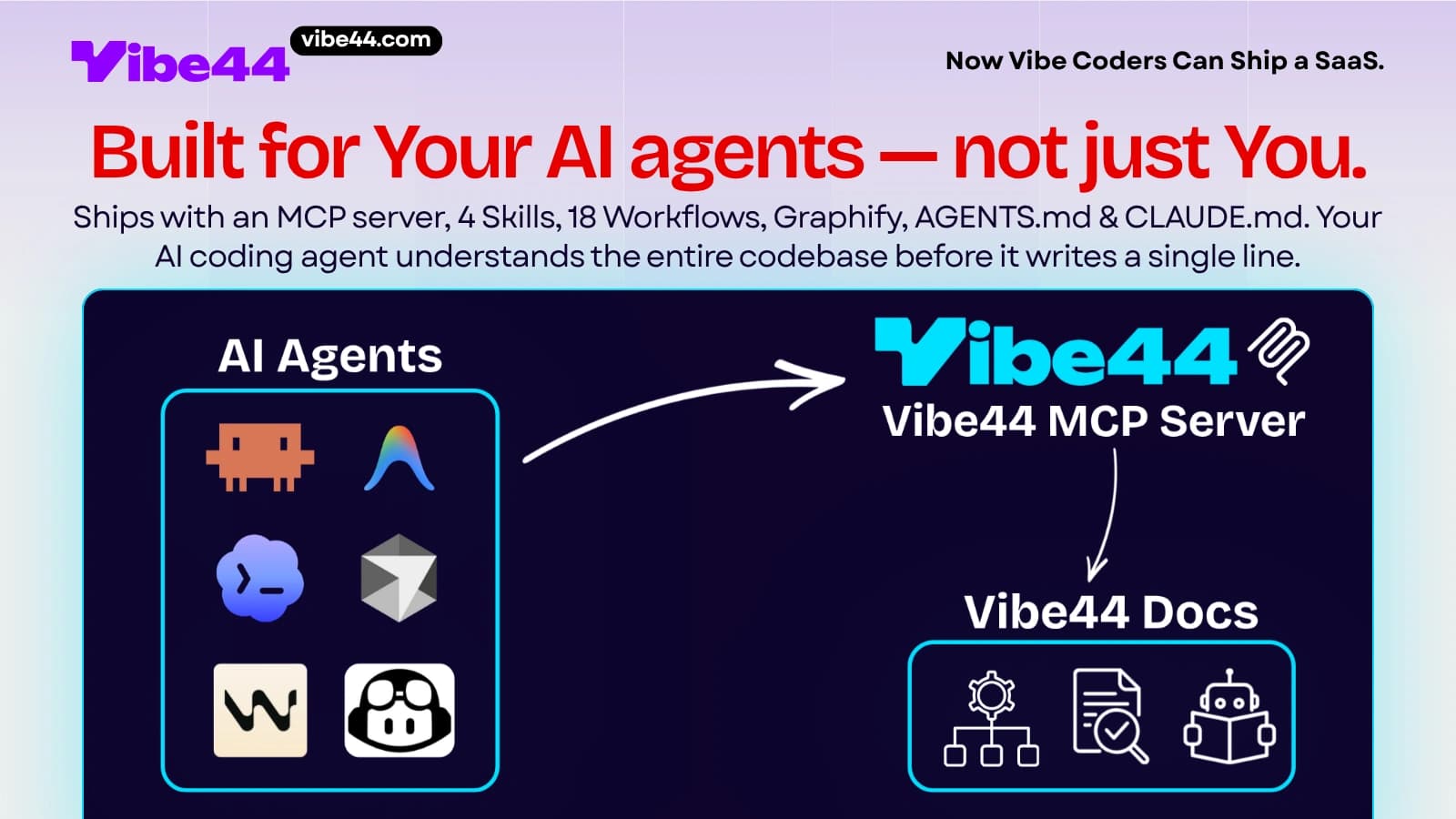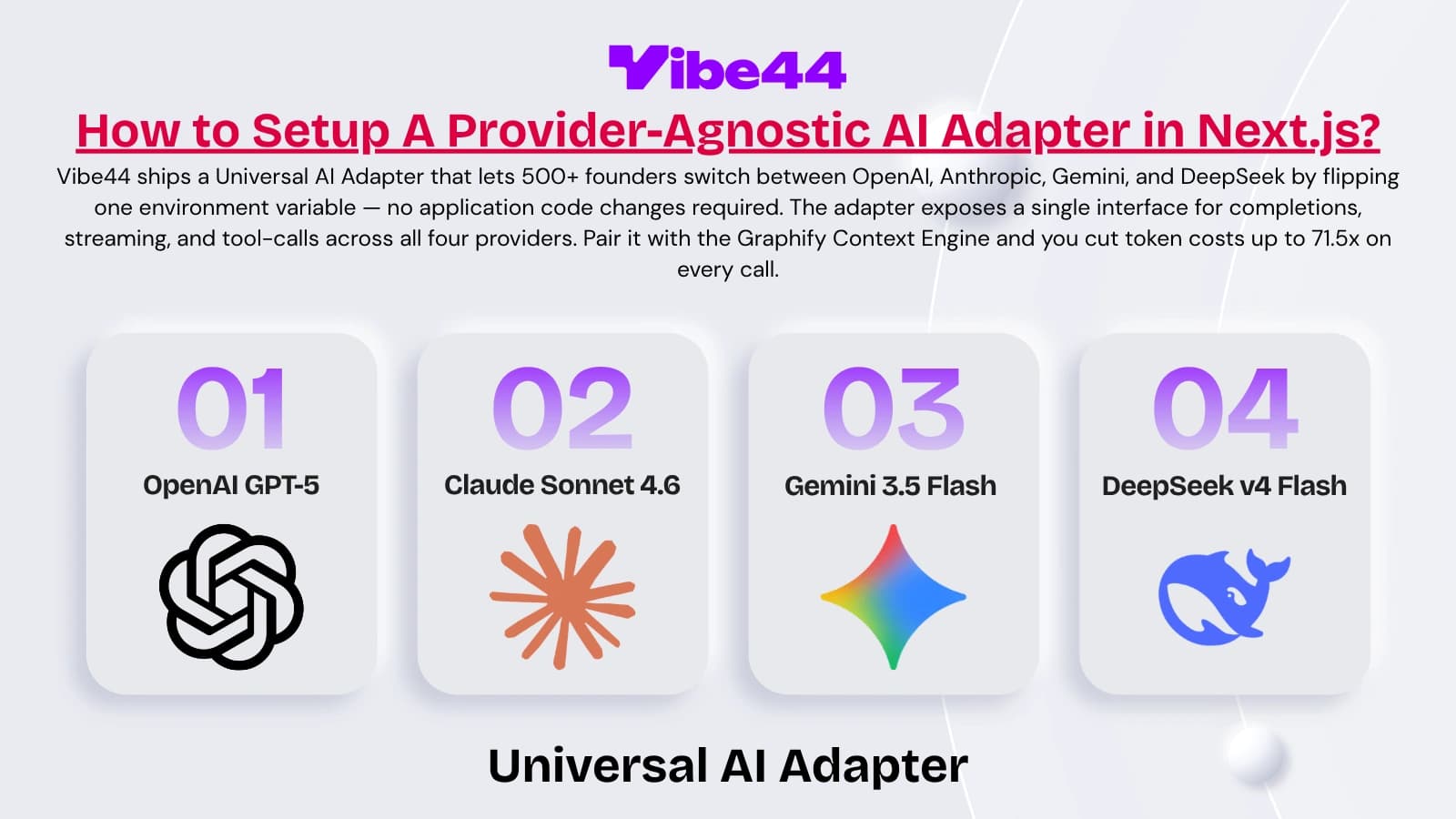
TLDR: Answer engines like Perplexity, ChatGPT, and Claude don't read your SaaS marketing site like a human does. They look for structured data, accessible API endpoints, and knowledge graphs. In 2026, ChatGPT alone processes 250–500 million weekly search-intent queries, and AI-referred traffic converts 42% better than non-AI traffic. To capture this wave, your architecture must be built for machine consumption from day one. Top founders are already building agent-native architectures using Vibe44 for a $197 one-time license.
The Shift from Search to Synthesis
For over a decade, SaaS founders have relied on a predictable playbook to generate organic traffic: write keyword-optimized content, build backlinks, and wait for Google to rank the pages.
But the landscape has fundamentally changed. According to First Page Sage's Q2 2026 estimates, ChatGPT now holds roughly 17% of all global digital queries, while Google retains approximately 80%. Perplexity processes around 50 million weekly queries. Users are bypassing traditional search engines altogether. When a developer asks, "What's the best Next.js boilerplate for a SaaS?", they aren't typing it into Google; they're asking Perplexity or Claude. These platforms don't return ten blue links — they return a synthesized, definitive answer.
This is the era of Answer Engine Optimization (AEO). According to HubSpot's Consumer Trends Report, 72% of consumers plan to use AI for shopping more frequently. If your SaaS isn't optimized to feed these LLMs high-signal, structured context, you simply won't exist in the next generation of discovery.
Why Architecture Determines AEO Success?
Traditional SEO is a marketing function. AEO is an engineering function.
An AI agent crawling your site isn't impressed by your font choices or your clever copywriting. It cares about deterministic data, structural clarity, and the absence of noise. If your SaaS architecture is built like a monolithic black box, answer engines will struggle to parse what your product actually does.
The data makes the urgency clear: BrightEdge and Ahrefs research shows that 40–55% of ChatGPT and Perplexity citations flow to fewer than 1,000 domains. Content without clear topical authority, structured data, and direct answers is systematically excluded from AI-generated responses — even when it ranks well on traditional Google results.
Here are the structural shifts required to make your SaaS answer-engine ready:
1. Structured Output Over Raw HTML
LLMs are excellent at extracting information from unstructured text, but it costs them tokens and processing power. Answer engines penalize high-friction extraction.
Your architecture needs to serve data in machine-readable formats. Next.js App Router makes this incredibly efficient. By leveraging generateMetadata and embedding JSON-LD (JavaScript Object Notation for Linked Data) directly into your layouts, you spoon-feed context to crawlers.
When an AI scraper hits your pricing page, it shouldn't have to regex a div class to find your tiers. It should hit a structured JSON-LD block that explicitly defines your product schema, price points, and features. According to BrightEdge data, pages with structured data (Article, Organization, Product schemas) are cited at measurably higher rates than unstructured content.
2. The Rise of the Agent-Facing API
If you want AI agents to recommend your SaaS, they need to be able to interact with it.
A standard REST or GraphQL API is designed for front-end clients or integrations. An agent-facing API is designed specifically for LLM tool use. It features simplified, highly descriptive schemas, strict typing, and deterministic error handling.
All leading AI search products have converged on agentic browse capability through 2026. ChatGPT Search performs multi-step web retrieval, reasoning, and follow-up research as part of a single query. Anthropic's Claude has pushed browse and tool use in a similar direction. An architecture that exposes an OpenAPI spec directly to crawlers has a massive AEO advantage.
3. Knowledge Graphs as the Ground Truth
This is where the paradigm truly shifts. If your own internal AI features are struggling to understand your codebase or data, external answer engines will struggle even more.
Naive vector RAG (Retrieval-Augmented Generation) is insufficient. It retrieves chunks of text based on semantic similarity, completely missing the structural relationships between entities.
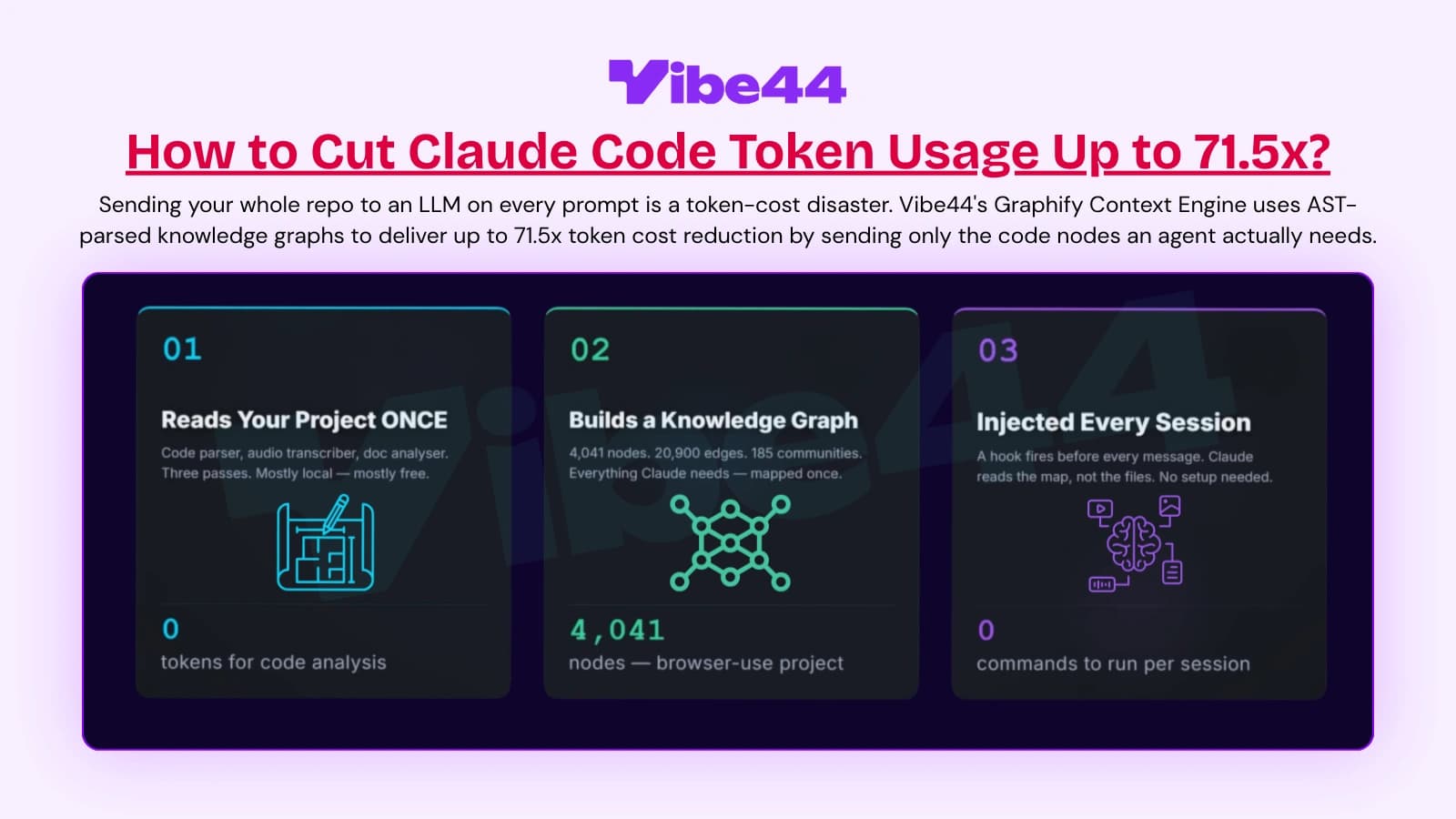
An AST-parsed knowledge graph solves this. By representing your data and code as nodes and edges, you provide a map of relationships rather than a bag of words. This is exactly what the Graphify Context Engine does. It maps every function, class, and module into a graph, providing deterministic, highly accurate context for agents.
When your internal architecture uses knowledge graphs, you inherently structure your data in a way that is profoundly "understandable" to any LLM that interacts with your platform. As Muck Rack's Generative Pulse 2025 report found, 82% of links cited by AI are from earned media sources — meaning the clearer and more authoritative your data structure, the more likely it is to be sourced.
Stop Building for Spiders, Start Building for Agents
The transition to AEO requires a fundamental shift in how we think about web development. You aren't just building a user interface anymore; you are building an agent interface.
If your architecture is heavily reliant on client-side rendering with massive JavaScript bundles, you are actively blocking LLM crawlers from understanding your value proposition. Server-Side Rendering (SSR) and Static Site Generation (SSG) — core features of Next.js — are no longer just about performance; they are critical for AEO survival.
The numbers don't lie: Non-branded informational query traffic is already down 15–30% across content sites year-over-year, while AI-referred traffic revenue per visit surged 254% during the 2025 holiday season. The traffic isn't just shifting — it's becoming qualitatively higher-intent. Adobe Digital Insights reports that AI-referred traffic now converts 42% better than non-AI traffic, a complete reversal from a year earlier when it converted 38% worse.
Frequently Asked Questions
1. What does AEO mean for my existing SEO investment? AEO is the natural evolution of SEO, not a replacement. HubSpot's 2026 AEO trends report emphasizes that winning brands blend both approaches to capture full-funnel visibility across traditional blue links, AI Overviews, and answer engines (ChatGPT, Perplexity, Gemini). Your existing SEO foundation — especially structured data and topical authority — directly fuels AEO performance.
2. How do I know if AI engines are citing my content? Traditional SEO tools don't track AI citations by default. Ahrefs found that 80% of LLM citations don't even rank in Google's top 100, meaning your Google Search Console data is blind to this channel. Tools like HubSpot AEO and Semrush AIO now offer AI visibility tracking, including Brand Visibility Score, Share of Voice, and Citation Analysis across ChatGPT, Perplexity, and Gemini.
3. What type of content gets cited most by AI engines? Content with clear direct-answer paragraphs in the first 2–3 sentences is cited 2–3x more often than buried answers. Original data, proprietary research, and first-party surveys are cited at the highest rate of any content format. Reddit (18%), Wikipedia (12%), and major news publishers (11%) dominate ChatGPT citation share — meaning topical authority and community trust are critical signals.
Ready to build an agent-native SaaS? Get the Vibe44 boilerplate — including the Graphify Context Engine — for a $197 one-time license and ship a production-ready, AEO-optimized app this weekend.